Scope, budget, systems and opening readiness.

Complete homestay management
We take responsibility for running the homestay.
From preparation and opening to pricing, guests, staff, property care, accounts and owner reports, Rudraleela manages the work that has to happen every day.
One operating team · Property-specific authority · Regular owner visibility
What management means
One team carries the work from plan to daily operation.
The exact setup changes by property. The responsibility does not: create a workable system, run it consistently, keep the owner informed and act before small problems become expensive ones.
People, listings, supplies and operating control.
Guests, rooms, food, service and issue closure.
Money, property, performance and decisions.
The full management scope
Eight connected parts of one homestay business.
Good management is not only guest service. Bookings, people, stock, property care, money and approvals have to work together every day.
Property and opening plan
We turn the property assessment into a room plan, work list, opening budget, operating setup and clear sequence of decisions.
Registrations and setup
We coordinate the business, tax, banking, licences, records and local operating requirements identified for the property.
Pricing and reservations
We manage rates, availability, enquiries, offers, booking channels, cancellations and the reservation calendar.
Guest communication
We handle the guest journey from the first question and arrival instructions to service recovery, departure and review follow-up.
People and daily supervision
We define roles, help recruit and train the team, set schedules and supervise the work required each day.
Rooms, food and supplies
We manage housekeeping, linen, amenities, food service, stock levels, purchasing and readiness standards.
Property care
We organise inspections, routine repairs, preventive maintenance, incident records and approval for larger work.
Accounts and owner reporting
We bring income, costs, taxes, reserves, capital balances, owner amounts and open decisions into a recurring report.

COMMERCIAL MANAGEMENT
Every room night is a decision about price, availability, guest fit and cost.
Pricing and reservations
Make the property bookable—and manage what happens next.
We do not leave a listing online and wait. Rates, availability, enquiries, offers, cancellations and channel mix are managed as one live calendar.
Set the rate
By room, season, demand, booking window, length of stay, channel cost and the property’s position.
Control availability
Keep room inventory, blocked dates, owner use, minimum stays and accepted reservations in one controlled view.
Use the right channels
Combine direct enquiries, Romancha and selected travel platforms where they improve reach or guest fit.
Learn from the booking pattern
Review conversion, cancellations, lead time, room demand and guest feedback before changing the plan.
Around every stay
The guest sees a stay. The team runs a sequence.
A consistent homestay is built from many small handovers. Every booking must move through preparation, arrival, service, departure and room reset without losing information.
One guest record
Reservation details, requests, payments, arrival information, service issues and departure notes remain connected.
One daily plan
Arrivals, departures, occupied rooms, meals, housekeeping, transport, repairs and special requirements are brought together.
One escalation route
The team knows who acts first, when a manager must step in and when the owner needs to be informed.

GUEST OPERATIONS
Warm service depends on quiet preparation behind it.
The operating cycle
What happens before, during and after a stay.
The property should not depend on one person remembering everything. The sequence is written, assigned, checked and improved.
Prepare the guest and the property
Confirm the reservation, collect required details, share directions, plan arrival, assign the room and complete the readiness check.
Run the experience
Coordinate welcome, housekeeping, meals, local support, requests, service recovery and any property issue that affects the guest.
Complete the stay
Complete checkout, inspect the room, record damage or maintenance, close payments, request feedback and update the guest record.
Reset and improve
Restore room readiness, replenish stock, assign repairs, review feedback and prepare the next arrival without carrying problems forward.
People and supervision
A homestay needs a team that knows the standard and who is in charge.
Define the work
Decide which roles are needed, what each person owns and what can be combined without weakening service or control.
Choose for the property
Look for reliability, local knowledge, judgement and trainability—not only previous hotel titles.
Practise the real journey
Train inside the property using room checks, arrivals, meals, requests, incidents and daily close.
Review the work
Use schedules, checklists, issue records and recurring reviews so standards do not depend on occasional inspection.
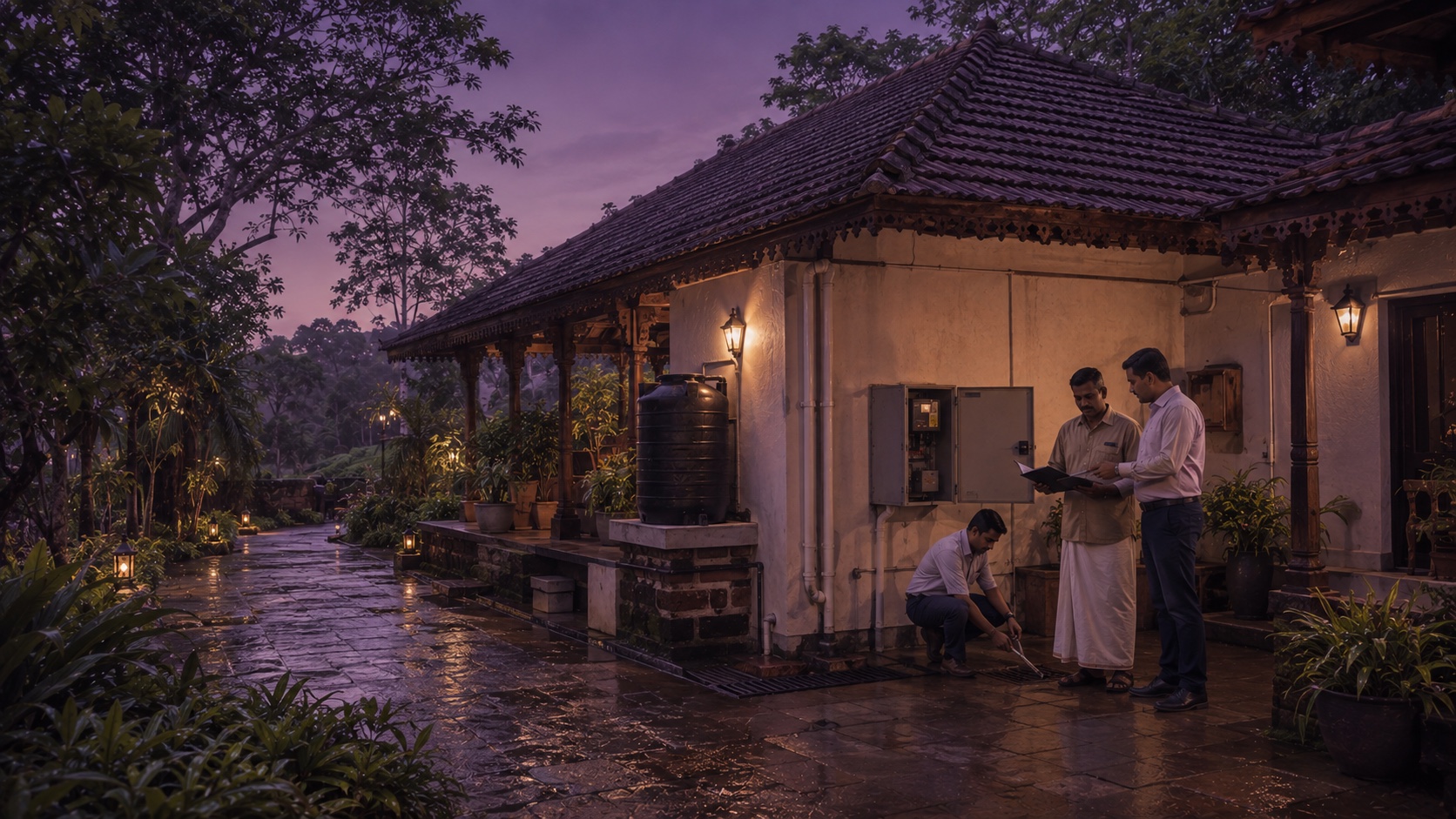
Property care
The building is not scenery. It is an operating responsibility.
Rooms, water, power, drainage, kitchens, equipment, gardens and guest areas need a visible maintenance rhythm. We separate daily readiness, preventive care, urgent protection and work that requires owner approval.
Guest areas, rooms, water, power, safety and visible defects.
Scheduled servicing, deep cleaning and seasonal preparation.
Problem, owner, urgency, cost, action and completion evidence.
Clear options and owner consent for structural or material spend.
Owner reporting
See the property, the money and the decisions together.
A monthly review should not be a collection of disconnected screenshots. The owner needs one understandable view of what happened, what changed and what needs a decision.
Bookings and income
Room nights, rates, cancellations, refunds, guest payments and other approved income.
Costs and cash
Payroll, supplies, utilities, channel cost, taxes, repairs, reserves and cash movement.
Property and guests
Maintenance, incidents, reviews, recurring issues and work that remains open.
Owner position
Owner amount, capital balance where applicable, decisions required and next-month priorities.

MONTHLY OWNER REVIEW
The useful report is the one that makes the next decision easier.
The first 90 days after opening
Stabilise the operation before trying to scale it.
The opening period is used to prove the guest journey, close property defects, strengthen the team and replace assumptions with real operating information.
Open under control
Begin with a manageable booking pace, complete real guest journeys and make sure the team can repeat the operating standard.
Close the gaps
Track room defects, service delays, supply failures, confusing instructions and maintenance issues until ownership is clear and work is closed.
Calibrate the commercial plan
Review rates, booking windows, room demand, channel quality, cancellations and guest feedback against the original plan.
Complete the first owner review
Bring the property, guests, people, maintenance, money and open decisions into one discussion with a written action list.
The timing and actions depend on the property, work required, team readiness and demand. Opening does not create a fixed performance guarantee.
For owners and homestay operators
Tell us what you have and what support you need.
Begin with the property or running homestay, its present condition and what you want to improve. We define the management scope only after understanding the operation.
Start a conversation ↗Private enquiry · About one minute · No commitment